If you’re a US citizen or resident eyeing the Dubai real estate market, you’re in the right place. This guide breaks down the entire Dubai property-buying process for Americans—no confusing jargon or wasted time, just the steps, rules, and best moves you need. Whether you want a vacation home, rental investment, or a place to retire under the sun, this walkthrough is tailored for US buyers at every stage. From legal paperwork and financing to finding the right apartment or villa, you’ll know exactly how to get it done without the usual headaches. Let’s get straight into what you need to succeed as a property buyer in Dubai.
Why Buy Property in Dubai
- Tax-Friendly Environment: Dubai is legendary for its zero property tax and no capital gains tax. For US buyers, this translates to higher long-term returns and a favorable climate for growing investments, unlike many US cities where property taxes can increase each year.
- High Rental Yields: Dubai routinely offers rental yields of 5-8%, sometimes higher in prime locations. Compared to US markets, that’s a big plus—especially if you’re targeting income properties in hot neighborhoods.
- Lifestyle and Safety: Dubai is modern, cosmopolitan, and one of the world’s safest big cities. Think luxury shopping, world-class restaurants, and year-round sunshine. Many American buyers are seeking not just a property but a new way of living or a secure secondary home base.
- Economic Growth and Stability: The city’s booming economy, backed by oil revenues and global tourism, keeps the property market moving. Dubai is pushing hard with strategic projects and infrastructure, so foreign buyers see long-term potential—not just a short-lived surge.
- Golden Visa and Residency Options: By investing in Dubai real estate, Americans can unlock residency benefits not available elsewhere. The Dubai Golden Visa is a strong incentive for those looking to establish a second home or expand internationally.
- Ease of Doing Business: The buying process is direct and straightforward, without imposing excessive red tape on foreigners. Americans find the rules clear, and in many areas, buying as a non-resident is as simple as it gets for international real estate.
All these factors make Dubai a favorite among forward-thinking US investors, retirees, and anyone seeking a new adventure or a smart return on their dollar. The market holds options for every motivation, whether you’re looking for profits, residency, or the ultimate lifestyle upgrade.
Overview of Dubai Real Estate Market
The Dubai real estate market is one of the most dynamic in the world, known for its modern architecture and ambitious growth. In recent years, property prices have seen both correction and steady recovery. As of 2024, residential prices are rising, particularly in popular districts such as Downtown Dubai, Dubai Marina, and Palm Jumeirah.
Demand for both residential and commercial properties remains strong, fueled by population growth, tourism, and continued foreign investment. Dubai’s appeal as a safe, business-friendly city makes luxury apartments, villas, and branded residences especially sought after by overseas buyers—including many from the US.
The government has taken steps to stabilize the market through strict regulations, thereby increasing investor confidence. New master-planned communities and off-plan projects reflect ongoing optimism and a vision for sustained growth, rather than a short-lived bubble.
Rental yields are typically higher than in most US cities, and the variety of properties—from affordable studios to ultra-luxury penthouses—ensures wide-ranging appeal. Looking ahead, experts forecast ongoing demand, new infrastructure, and regulations that create both stability and new opportunities for foreign buyers.
Can Foreigners Buy Property in Dubai
Yes, foreigners—including US citizens—are allowed to buy and own real estate in designated areas of Dubai. There’s no citizenship requirement and no need for permanent residency to purchase property. Dubai law clearly states that non-UAE nationals can buy freehold property in pre-approved zones, with the same rights as locals in those areas.
You will need a valid passport and, in some cases, extra documentation for compliance checks. But as a US buyer, you’ll enjoy clear ownership rights, and there are no nationality-specific restrictions affecting Americans beyond the regulations that apply to all foreigners. This policy is part of Dubai’s effort to attract international investment.
Types of Properties Foreigners Can Buy
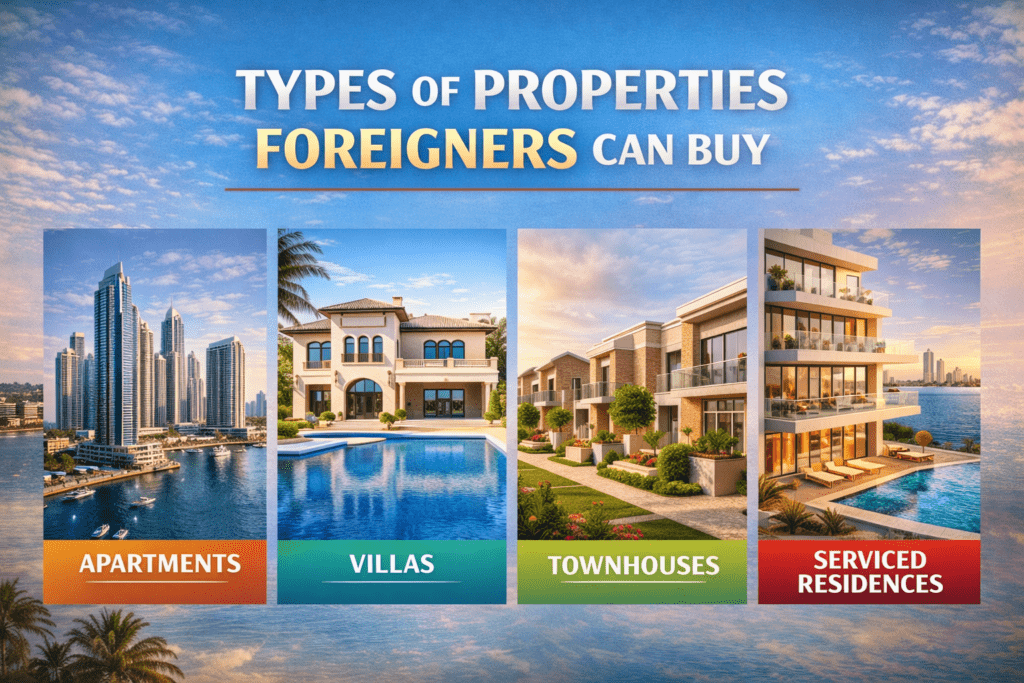
Foreigners, including US buyers, have access to a diverse selection of property types in Dubai’s most desirable areas. The market caters to a wide range of preferences—including apartments, villas, townhouses, and commercial spaces. What makes Dubai unique is its clear split between freehold and leasehold zones, each with different rights and rules.
Buyers can also choose between completed “ready” properties and off-plan developments under construction, each offering distinct benefits. The flexibility allows Americans to align a purchase with their goals, whether they want to move in right away or invest in a future project for potentially higher returns.
As you weigh your options, you’ll want to consider not only the property type but also the ownership structure and delivery timeline. The next sections go in depth on these distinctions—setting you up to choose the right fit for your needs, risk tolerance, and investment strategy.
Freehold Versus Leasehold Areas in Dubai
- Freehold Areas: Buyers get full ownership of the property and the land it sits on. Available in areas such as Downtown Dubai, Dubai Marina, and Palm Jumeirah, these properties offer the flexibility to sell, rent, or pass them down by inheritance.
- Leasehold Areas: Buyers purchase the right to occupy and use a property for a lease period—usually up to 99 years. Ownership reverts to the landowner upon lease expiration. Examples include parts of Deira and older Dubai districts.
- Regulation Differences: Freehold areas confer full ownership rights, while leasehold agreements provide longer-term but limited control. Most international buyers prefer freehold for simplicity and longer-term security.
Buying Off-Plan Versus Ready Properties
- Off-Plan Properties: Purchased before completion, often directly from developers. Usually offers lower initial prices and flexible payment plans, but buyers must wait for handover and face some construction risk.
- Ready Properties: Completed and available for immediate occupancy. Buyers can see exactly what they’re getting and can rent or move in right away, though pricing may be higher than off-plan options.
- Key Considerations: Off-plan suits investors with the time to wait and appetite for risk, while ready properties suit those who want certainty and immediate use or rental income.
Popular Property Types Available for US Buyers
- Apartments: Found in skyscrapers throughout Downtown, Marina, and JLT, ideal for urban living and consistently strong rental demand.
- Villas: Standalone houses or lavish residences in communities like Arabian Ranches, perfect for families and those wanting more privacy.
- Townhouses: Blend of community living and space, offering a middle ground between apartments and villas—often in suburban developments.
- Serviced Residences: Furnished units in branded buildings with hotel-style amenities, bringing hassle-free ownership and easy letting.

Key Steps to Buying Property in Dubai
Buying property in Dubai as a US citizen follows a well-defined path, though it’s not exactly what you might expect stateside. Each phase, from budgeting to title transfer, has its own rules and best practices.
Start by assessing your finances and clarifying how much you want to invest. Next, zero in on locations that fit your goals—whether you’re chasing rental yield, lifestyle, or long-term value. Finding a trustworthy agent or developer is key in Dubai’s competitive landscape.
The search process typically includes online research, property viewings, and, for remote buyers, virtual tours. Once you spot the right fit, you’ll make an offer, negotiate with the seller, and work through contract details. Each of these steps has nuances designed to protect buyers and ensure smooth transfers—especially for foreigners buying from overseas.
The sections ahead break down each phase in detail, spotlighting the tips, risks, and strategies every US buyer should know before putting down a deposit or hopping a flight to Dubai.
Setting Your Budget and Financial Planning
- Assess Financial Standing: Review your income, savings, and current debts to decide how much you can safely invest without overstretching your budget.
- Estimate Costs Beyond Price: Include not only the property price but also registration fees, maintenance, agency commissions, and potential currency conversion impacts.
- Explore Mortgage Options: US citizens can often access mortgages in the UAE, but check how much you qualify for and the required down payment—typically 20%.
- Plan for Reserves: Keep a cushion set aside for unexpected expenses or market shifts, especially if you’re investing from overseas.
Choosing the Right Location in Dubai
- Consider Lifestyle Factors: Downtown and Marina areas offer a lively city vibe, while Arabian Ranches and The Meadows are quieter, family-oriented communities.
- Consider Investment Priorities: Some neighborhoods offer higher rental yields, while others excel in long-term appreciation. Research trends to align with your strategy.
- Check Accessibility: Proximity to major roads, schools, amenities, and airports affects convenience and future resale value.
- Evaluate Community Infrastructure: Look at what’s nearby—parks, shopping malls, hospitals—since these features shape demand and satisfaction.
Working With Real Estate Agents and Developers
- Select Licensed Professionals: Ensure your agent or developer is certified by the Dubai Land Department (DLD) to avoid fraud or misrepresentation.
- Check Reputation and Track Record: Look for firms with positive client testimonials, a long-standing history, and a track record of successful project delivery.
- Ask Key Questions: Inquire about hidden fees, after-sales support, developer handover times, and maintenance management.
- Protect Your Interests: Insist on clear contracts and transparent processes before passing any funds to agents or developers.
Making an Offer and Negotiating Price
- Research Market Rates: Use public records and agent advice to gauge fair value, making sure your offer aligns with recent sale prices in the neighborhood.
- Make a Competitive Offer: Submit a written offer through your agent, along with the required deposit, typically 5-10% of the purchase price.
- Negotiate Terms: Discuss any contingencies, repair requests, delivery dates, and included furnishings before agreeing to a final deal.
- Understand the Process: Negotiations are common and expected, but once both parties sign a Memorandum of Understanding (MOU), the terms are binding, and deposits are nonrefundable except in specific cases.
Understanding Legal Requirements for US Buyers
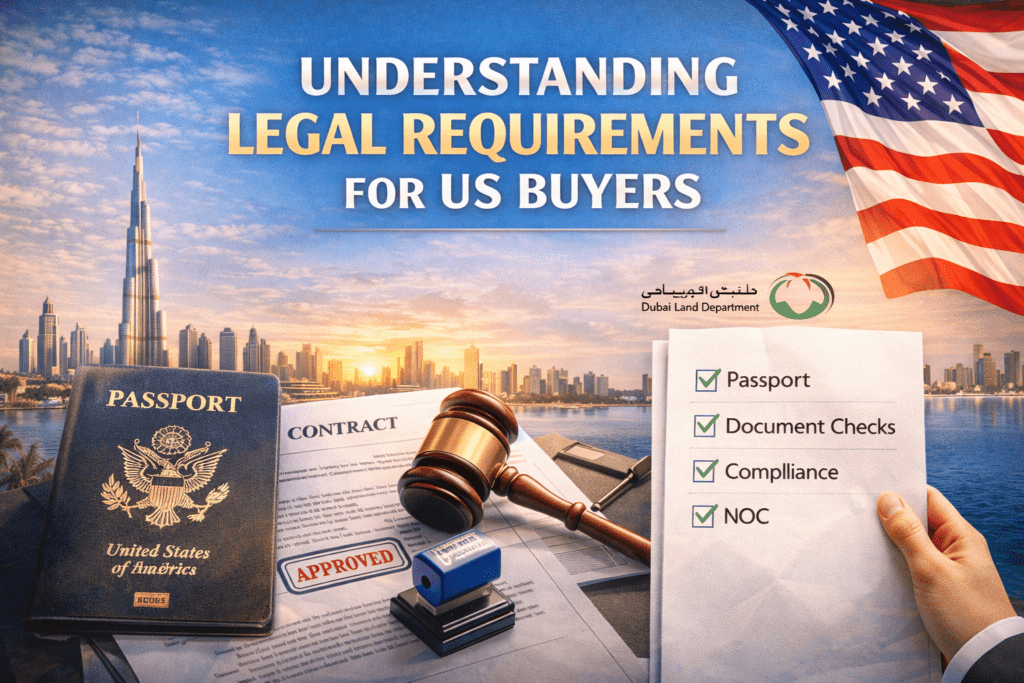
The Dubai property market welcomes foreign buyers, but US citizens should understand the legal framework and essential steps to protect their interests. Buying here isn’t like buying at home—Dubai puts compliance and documentation first to ensure smooth, secure transactions.
You’ll need to gather certain legal documents and clear government checks before finalizing a deal. Due diligence is also crucial: verifying property titles, checking for outstanding liabilities, and ensuring the developer is approved goes a long way in avoiding future headaches.
The Dubai Land Department (DLD) anchors the whole process, ensuring all parties meet their obligations. Legal advisors, whether lawyers or accredited property consultants, can help American buyers navigate compliance rules and prepare the paperwork you’ll need for a safe, enforceable purchase.
The upcoming sections dig deeper into the vital documents you need, how to vet property titles, and what you should know about working with Dubai’s government authorities. Getting the legal part right sets the foundation for a worry-free investment.
Essential Documents Needed to Buy Property
- Passport Copy: A clear copy of each buyer’s valid U.S. passport, required for identification and registration.
- Proof of Address and Residency: Recent utility bills or bank statements from your home country to confirm your current address.
- Income and Financial Statements: Bank statements or income verification may be needed for mortgage or compliance checks, especially for off-plan properties.
- Non-Objection Certificate (NOC): Provided by developers for resale properties, confirming there are no outstanding dues.
- Other Supporting Documents: Power of attorney (if appointing a representative), or marital status documents, sometimes requested for inheritance or co-ownership cases.
Role of the Dubai Land Department
The Dubai Land Department (DLD) is the primary government authority responsible for regulating and overseeing real estate transactions in the emirate. It manages property registration, maintains records, and issues title deeds for all legal transfers.
The DLD also sets and enforces rules to protect buyers, such as requiring developers to be approved before selling off-plan units and holding escrow accounts for payments. For Americans, all sales and transfers must be processed through the DLD to ensure full legal recognition and protection.
The DLD’s centralized system ensures transparency, making it hard for fraud or errors to slip through. Its online portals also enable foreign buyers to access services, track progress, and verify properties remotely, if needed.
Payment and Financing Options for Foreign Buyers
Paying for Dubai real estate is flexible, whether you plan to use your own funds, take out a bank mortgage, or tap into special developer payment plans. This variety helps US buyers match the right financial structure to their needs and risk tolerance.
Bank mortgages are available to foreigners for both ready and some off-plan properties, subject to eligibility checks and standard down payments. For those not seeking a loan, cash payments can expedite transactions—but always use escrow accounts or secure payment channels.
Many developers, eager to attract overseas cash, offer installment plans that extend even after handover. These can lower entry barriers, especially for off-plan units. US buyers must consider currency fluctuations, wire transfer logistics, and the UAE’s banking compliance checks before finalizing their payment route.
The next two sections detail the pros, cons, and requirements of each option—helping you find the financing path that keeps your purchase secure and your stress level low.
Can US Citizens Get Mortgages in Dubai
Yes, US citizens can obtain mortgages from UAE banks to purchase property in Dubai. However, you’ll need to meet specific requirements—typically including a minimum income, proof of stable employment, and a down payment starting at 20-25% of the property value.
Required documents include a valid passport, proof of income, bank statements, and, in some cases, proof of a UAE bank account. Not all local banks lend to non-residents, but several major UAE banks cater to international buyers. Approval times can vary, and interest rates may differ from US banks, so shop around for the best terms.
Alternative Financing and Payment Plans
- Developer Payment Plans: Many developers in Dubai offer post-handover payment terms, allowing buyers to pay a portion after moving in. This spreads out cash flow and reduces upfront strain.
- Direct Cash Transfers: US buyers can use international wire transfers for full or partial payment, but always process large sums through escrow or regulated accounts for safety.
- Digital Banking Solutions: Some UAE banks support digital onboarding for foreign buyers, streamlining fund transfers and compliance checks from abroad.
- Third-Party Financing: While less common, some buyers use home equity or personal loans secured in the US to convert funds into AED for purchase, though these typically lack the protections of local mortgages.
Step-by-Step Property Registration Process
- Sign the Memorandum of Understanding (MOU): Both the buyer and the seller sign an MOU outlining the terms of sale, typically with a 5-10% deposit held by the agent or broker.
- Apply for a No Objection Certificate (NOC): The seller obtains this from the developer to confirm there are no outstanding dues or service charges on the property.
- Finalize Sale Agreement: After the NOC, the parties schedule a meeting at the Dubai Land Department (DLD) to sign the contract and complete the transfer of ownership.
- Payment Settlement: The buyer provides a manager’s check or an approved payment for the remaining property price, along with any outstanding fees.
- Transfer and Registration: The DLD registers the property, officially transferring ownership and issuing a new title deed in the buyer’s name. This typically concludes on the same day as payment settlement.
- Take Possession: After receiving the title deed, the buyer coordinates with the seller or developer to collect keys and access cards for move-in or rental marketing.
Fees and Taxes Involved in Buying Dubai Property
- Dubai Land Department (DLD) Fee: A standard 4% of the purchase price, paid at registration. This is the single largest transaction fee and is mandatory for all buyers.
- Agency Commission: Typically 2% of the property price, payable to the real estate agent or brokerage firm that facilitated the deal.
- No Annual Property Tax: Unlike in the US, Dubai has no annual property or capital gains tax, resulting in significantly lower ongoing holding costs.
- Value-Added Tax (VAT): While most residential property sales are VAT-exempt, some service charges or commercial properties may be subject to a 5% VAT rate.
- Maintenance and Service Fees: These are charged annually by the property management company to cover communal spaces and facilities, varying widely by property type and location.
- Currency Exchange and Transfer Fees: For US buyers wiring funds internationally, expect standard bank charges and be aware of exchange-rate swings that can affect your net cost.

Understanding the Dubai Golden Visa for Property Investors
The Dubai Golden Visa is a residency-by-investment program allowing foreigners, including US citizens, to live in the UAE long-term. Property buyers may be eligible for a 5- or 10-year Golden Visa if they invest at least AED 2 million (about $545,000 USD as of mid-2024) in real estate.
Benefits include long-term residency for yourself and eligible family members, simpler bank account opening, and easier work or business licensing. Having a visa eliminates the need for a local sponsor and enables flexible in-and-out travel from the UAE.
To apply, buyers submit ownership documents showing qualifying investment value, along with a passport, title deed, and proof of medical insurance. Most applications are processed in several weeks, and the program has become a popular path for US investors seeking global mobility, asset protection, and security in a stable, tax-friendly environment.
Golden Visa holders also enjoy streamlined government services and can sponsor family. Note, however, that the visa applies only to properties in freehold zones and may exclude some off-plan units until they are completed and registered.
Common Challenges and Tips for US Buyers in Dubai
- Time Zone Differences: Coordinating with agents, sellers, and banks on Dubai time can slow communication. Work with local representatives to keep the process moving smoothly, even when you’re asleep.
- Cultural and Business Differences: Negotiation styles and paperwork expectations in Dubai may not align with what Americans are used to. Take time to understand local customs, and don’t rush decisions.
- Document Authentication: Some US documents (like powers of attorney) must be notarized and attested before use in Dubai—plan ahead for mailing and processing times.
- Currency Fluctuation Risk: The exchange rate between the US dollar and the UAE dirham is subject to volatility. Watch the market and consider forward contracts for large transfers.
- Title Verification: Failing to double-check property titles or developer credentials is a common pitfall. Always use a licensed professional for due diligence.
- Practical Solutions: Hire a bilingual or Dubai-based advisor who understands both American and UAE business settings, and stay organized with document checklists and timeline trackers for each stage.
Frequently Asked Questions About Buying Dubai Property
- Are there restrictions for Americans buying in Dubai? No, US citizens can purchase freehold properties in designated areas without needing residency or a local partner.
- Do I need to live in Dubai after buying? Not at all. Many US investors rent out their property or visit occasionally, with no minimum stay required unless the stay is linked to a residency visa.
- Can I get a mortgage if I don’t live in the UAE? Yes, many UAE banks lend to US non-residents, but requirements and rates may differ from those you’re used to at home.
- What happens if I want to sell? You can resell your property at any time and repatriate your profits, subject to standard DLD transfer fees and bank clearance processes.
- Are properties sold furnished? It varies. Many new apartments come with appliances, but full furnishing depends on the developer, property type, and negotiated terms.
- Who manages my property if I’m overseas? Property management companies handle everything from finding tenants to maintenance, making remote ownership much easier for American investors.